
Meet the Artists
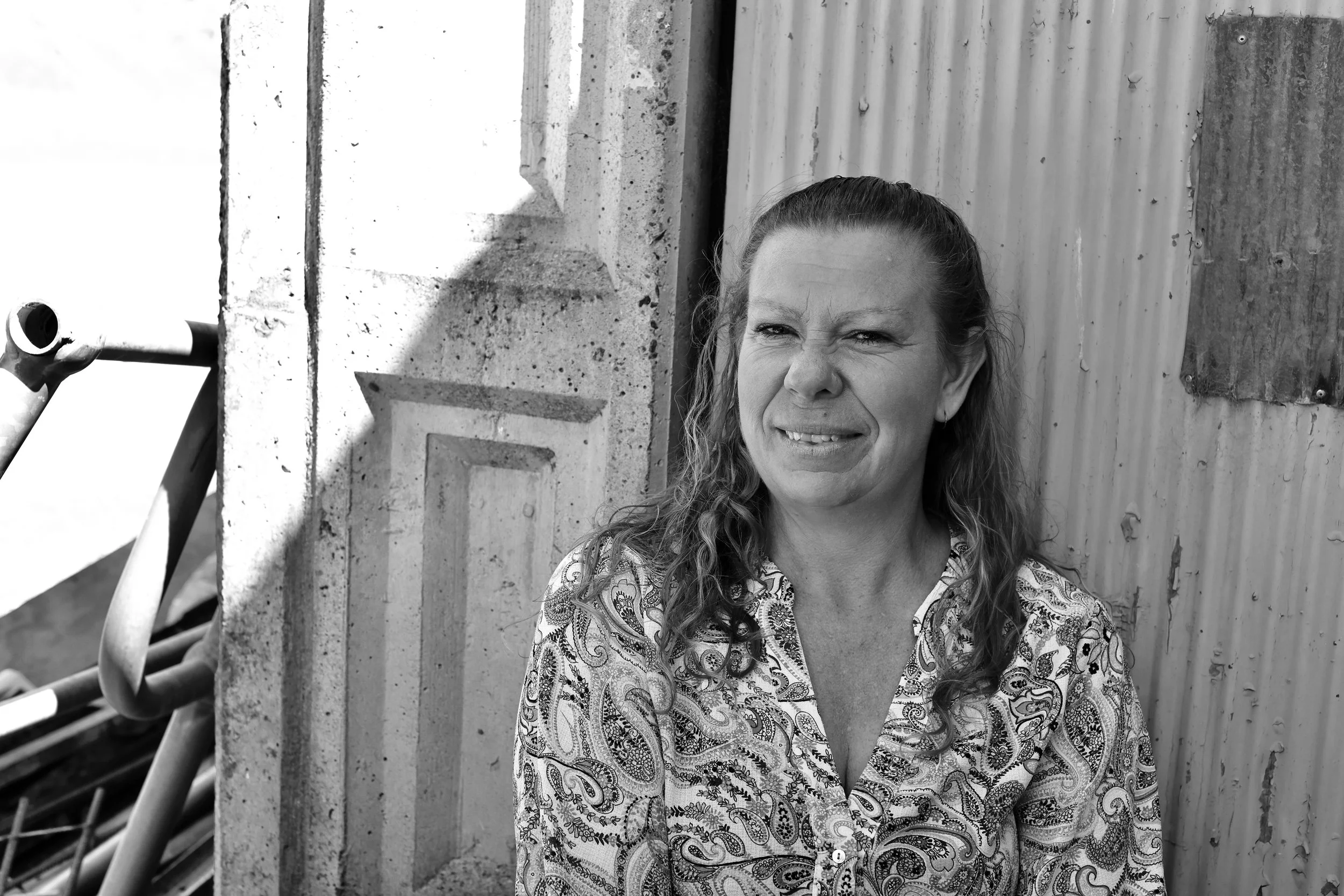
Jodie Munday
In person A Wiradjuri woman living in Gundary NSW, I am a visual artist and weaver and have been studying art and building skills for most of my life. I love working in a variety of art forms including drawing, painting, weaving and fibre art, photography, printmaking, pottery, and wood burning (poker work). Many of my works are a combination of these mediums and elements resulting in mixed media forms once completed.
I began my own business in 2011 Cr8ive Art and after a break for some time to raise my young son and some challenging personal situations I began focusing on building my business again in 2017. Since that time, I have accepted and been involved in many arts projects including Regional Futures- Volatile Landscapes, Regional Arts-Work of Art Program, taken PD opportunities with other artists and at Kurdinthi- First Nations Weaving Salon and Program in Adelaide.
I have held solo exhibitions and group exhibitions in multiple lace across the Southern Tablelands and SouthernHighlands of NSW and have 2 shows this later this year in the nation’s capital of Canberra. I have also entered multiple arts awards and prizes over the past three years and been selected as finalist in Ravenswood Women’s Art Prize, Goulburn Art Award, Fishers Ghost Art Award, Mac Yapang Art Award, National Contemporary Art Award and more. I have received highly commended awards and won the Sustainability Award in multiple of these prizes.
Community Workshops with both adults and children sharing and teaching the skill of weaving across the Southern Tablelands, Southern Highlands and beyond is a huge part of my practice, instilling knowledge, social and economic capacity building for our mob and making sure our young ones grow up proud and keeping culture alive.
I also work in multiple schools across the region sharing culture and working with educators and students to build culture not just into the classroom but into everything the educations settings do.
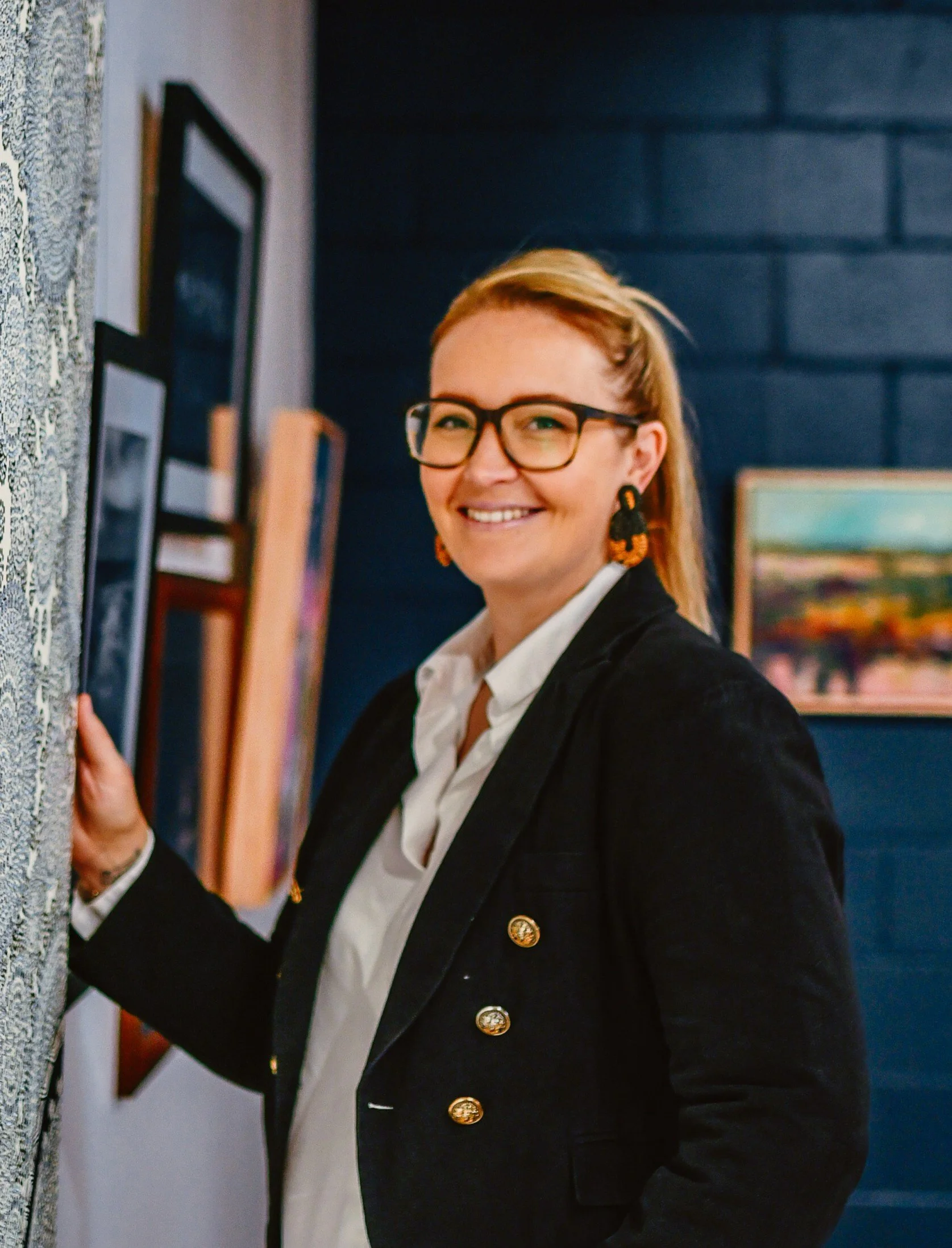
Jamie Lea Trindall
Inperson Wiradjuri/ Ngunnawal artist living on Wayilwan/Gamilaroi Country in North West NSW. With over 20 years of practice, Jamie-Lea creates bold, brave, and authentic artworks that celebrate the landscapes, stories, and cultural heritage of South East Australia. Her multidisciplinary practice spans acrylic painting, ceramic installations, digital design, and wearable art, offering clients unique creative solutions that connect people to culture, history, and the beauty of Country.
Jamie-Lea was born in Coonamble NSW, completing her HSC at Coonamble High School. She undertook her Bachelor of Art Education College of Fine Arts UNSW, with a major in Sculpture and a minor in Photography, immersing herself in Art Education, Aboriginal history and the research roles of arts workers.
In 2009 Jamie-Lea returned to her hometown to take on the role of Executive Director for Outback Arts, a not for profit arts organisation in far North West NSW. Outback Arts develops and promotes arts and culture in the far west through a broad range of community arts development programs and special initiatives that supports communities that are limited or disadvantaged in terms of access to arts and culture.
Her passion and advocacy for community arts practice has played an integral role in her own artistic achievements. Her multi-disciplinary practice connects the narrative between her contemporary arts practice to the stories of her upbringing, exploring native wildlife and her families connections as stockmen, drovers, cooks and adventurers.
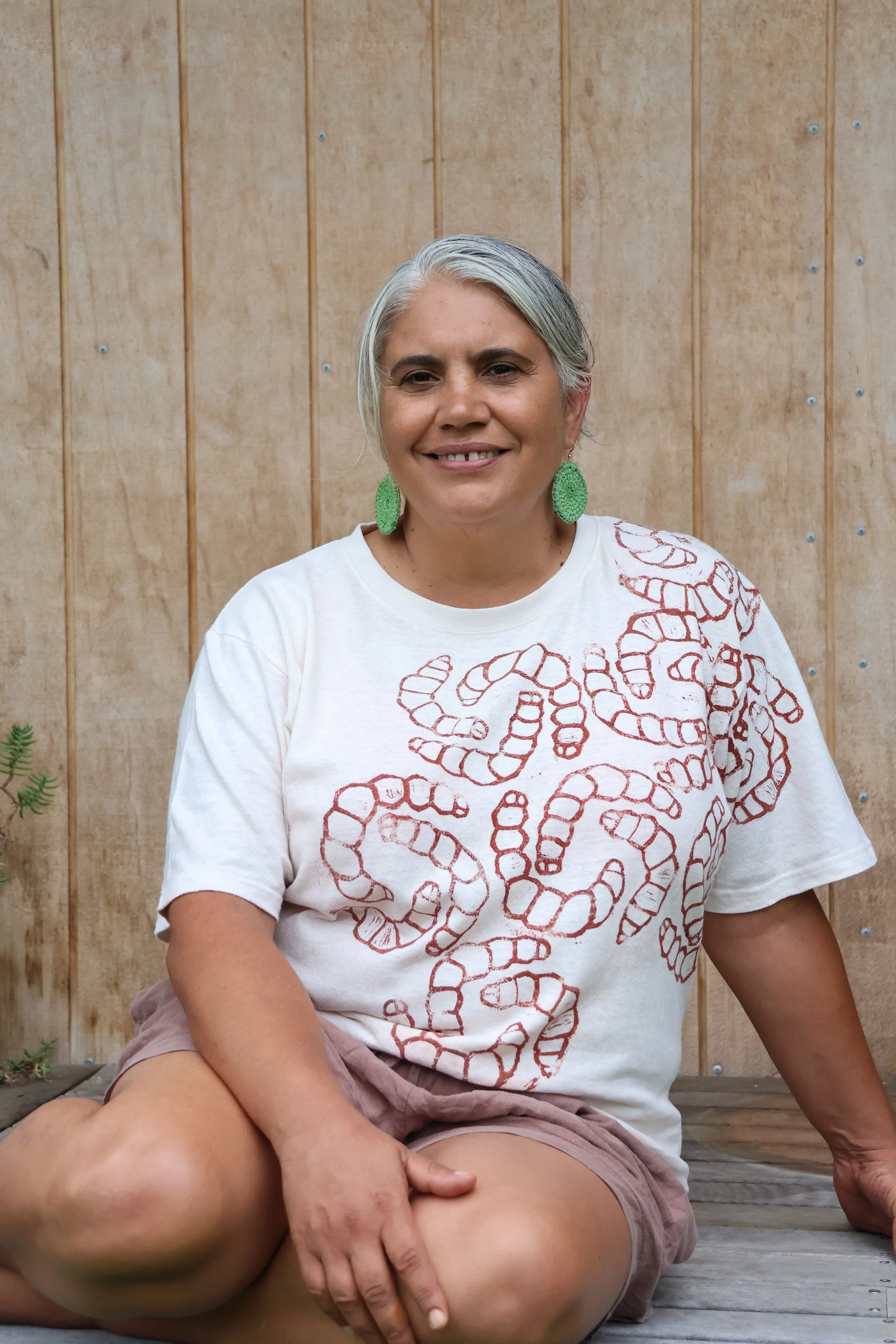
In person Kylie Caldwell
Kylie Caldwell’s art practice is a dynamic and evolving exploration of culture, identity, and continuity. As an interdisciplinary artist from Bundjalung Nation in the Northern Rivers of NSW, her work is deeply informed by her connection to Country, community, and the responsibility of carrying cultural knowledge forward. She approaches her practice as both a creative and cultural process — one grounded in learning, reflection, and storytelling.
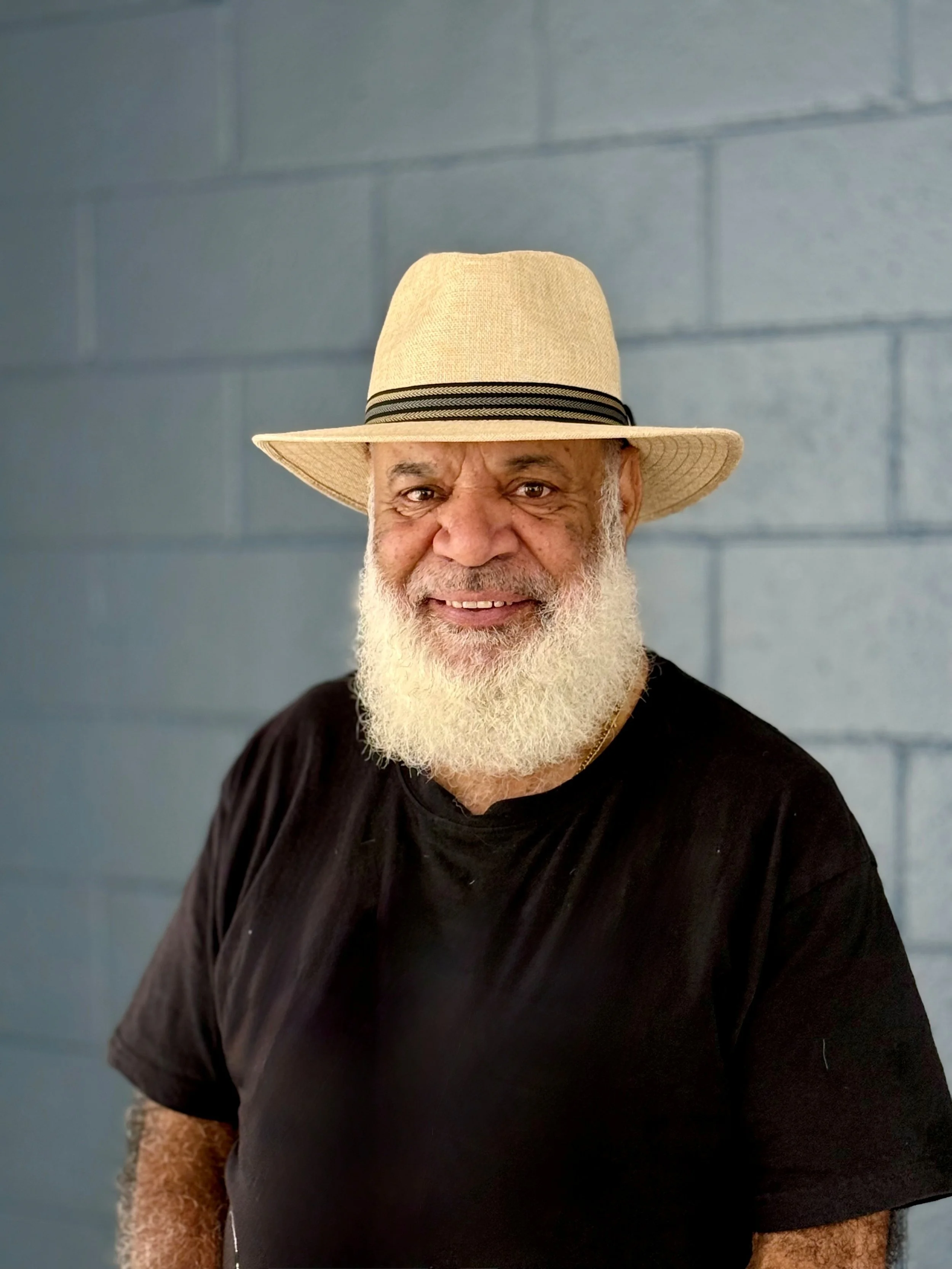
In person Sooty Welsh
Sooty Welsh has moved back to his hometown of Coonamble after moving around, mostly in Sydney. As part of the Stolen Generation, he has been home for thirteen years now, longest time he’s ever spent on the land of his ancestors. “I am Wayilwan. My grandmother mother was born out at Quambone; my grandfather was from a place called Wingadee, that is all on country – I’ve never really thought much about being connected to the country, but I can feel it now – it is home now”.
Sooty is a ceramic artist, who makes hand crafted pots and pieces, richly glazed and marked with unique markings. His markings are a contemporary representation of those made traditionally by his Wayilwan ancestors and have been found carved on the trees and into the land in the region.
“I originally learned about Aboriginal culture in Sydney, making artifacts at a cultural centre. Years later, I began to record things with my camera. With that awareness, I came back to Coonamble and was ready and able to learn more about my own culture”.
Tree carvings, traditional tools and cultural artifacts are all inspirations for Sooty’s art. The pieces he creates are handmade and based on the cultural information that is etched into the area. A traditional Coolamon can be converted into a small bowl or even an incense burner. “Nobody really knows exactly what the old markings mean, but it has a magic feel about it and it is what inspires the designs I make”.
Sooty is always happy to take up his other creative pursuits to keep himself inspired. When he has had enough of ceramics, he may turn to photography, which he loves, or even to traditional artifact making. The important thing to him, is that he maintains his creativity; for his story, for his understanding, and for his health. “From time to time I’ve had problems with depression, but when I make art then those things aren’t there. I’m always trying to get other people to participate, because I know that it’s good for your health”.
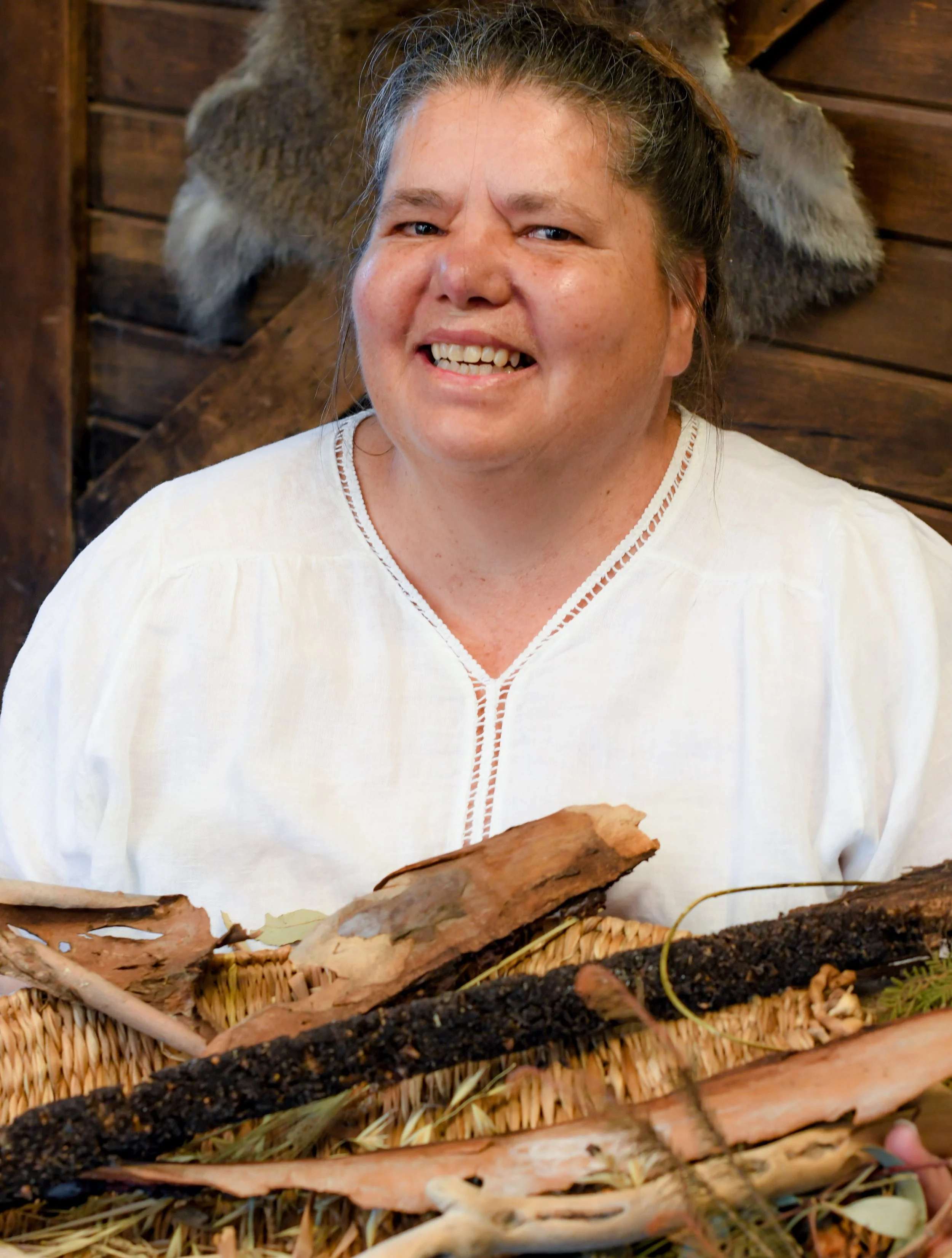
In Person Tania Hartigan
Tania Hartigan is a Gamilaraay artist, bush foods practitioner, and cultural facilitator based at Wallabadah (Wilgabah) in regional New South Wales. Raised in Woolbrook and connected to Barraba, Quirindi, and Gunnedah, her work is deeply grounded in family, Country, and the knowledge embedded in landscape. As the founder and owner of The Artshack@Wilgabah, established in 2012, Tania has created a vital regional hub for creative practice, cultural exchange, and community-led arts experiences.
Working across painting, pastel portraiture, printmaking, and weaving, Tania’s practice reflects an intimate relationship with Country. Her work is characterised by earthy palettes, textural sensitivity, and careful observation, often revealing the quiet, layered stories held within land. Her portraiture centres kinship and community, expressing the strength of intergenerational connections and the continuity of cultural identity.
Tania has built a strong exhibition profile, with recent and upcoming highlights including presentations at the New England Regional Art Museum (NERAM), Tamworth Regional Gallery, and participation in the Darwin Aboriginal Art Fair (2025). She is also part of the 2026 New Horizons – Emerging Voices in Landscape mentorship with Angus Nivison and will exhibit new work alongside his major retrospective. Earlier exhibitions include the Yinaar series, Earth Canvas, and the touring Body of Work across North West NSW.
An experienced facilitator and cultural leader, Tania delivers workshops and public programs across regional NSW,working with organisations such as Casula Powerhouse Arts Centre, Arts North West, and Tamworth Regional Gallery. Her practice extends into design and illustration, including commissions for Fire and Rescue NSW and the llustrated publication Miyaay Miyaay. Through her multidisciplinary work, Tania continues to foster cultural knowledge, creativity, and connection to Country.
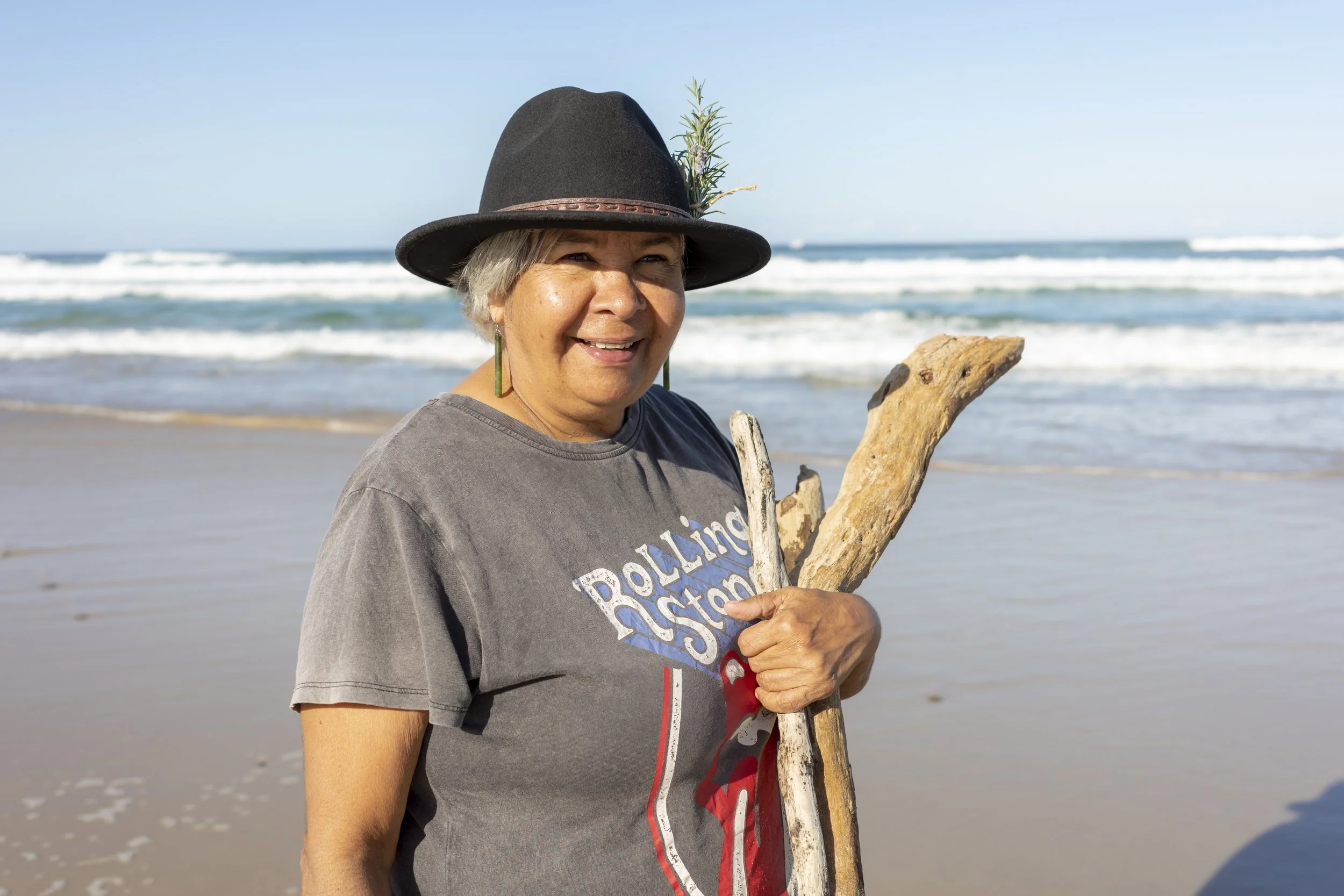
Kay Williams
Online I am a Kamilaroi woman and multi-disciplinary artist and educator. Born in Narrabri, raised in western Sydney and Cairns. My love of exploring, listening and responding to Country, shapes my creative and cultural expression. My practice flows through many forms; drawing, installation, bush dyeing, printmaking, video, and mark making with ochre, with each process becoming a way of listening to Country. Examining many natural mediums, I enjoy gathering natural materials in the places travelled with care and respect. These elements are then woven into works, carrying their own stories of place and connecting her to culture. I use creative expression to speak on identity, belonging and connection, investigating the relationship and interactions between myself and each material.
Honouring deep connection to the elements of water and earth. The water for its movement, stillness and renewal, and the earth for its enduring and transient presence, forming a dialogue of merging worlds and the balance between the seen and the felt.
I work with silk, wool and paper, and often source remnants from various places. I use these to create a more sustainable artwork.I sometimes take my textiles into the environment and place them in the elements to photograph or film. This particular silk piece was taken to a place in Cairns called Crystal Cascades where I played with the silk and filmed
this in the water and watched the colours dance in the flowing stream. The audio has the stream flowing but also children’s voices in the background enjoying the natural swimming holes.
My bush dyes on paper are another medium I enjoy creating and the process and outcome are very different to the silks and wool but using similar techniques. My process is unique to my practice in creating works in textiles and paper.
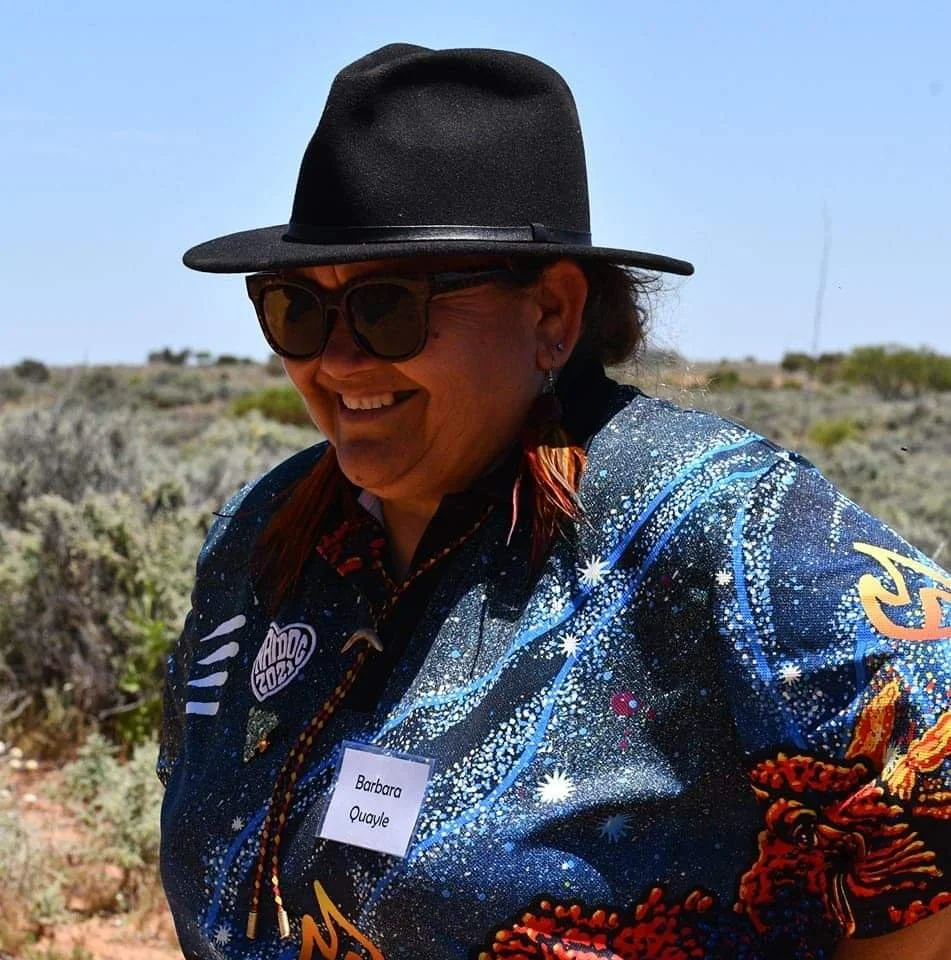
Barbara Quayle
Online In the spirit of our ancestors and sacred connection to country, I Barb Quayle of Palirika Barka Jewelry, present a collection of jewelry crafted from the heart of Barkindji Kiira (country).
Each piece is a celebration of my heritage, incorporating a variety of gumnuts, native plants, emu feathers, echidna quills, and other nature all transformed with care and respect into jewelry that carry the essence of my culture.
These creations are a bridge to the deep, spiritual connection we all share with Country. Through my website, I would like you to engage in the experience of the beauty and wisdom of Australian Aboriginal craftsmanship, with some pieces resonating with stories and traditions of the Barkindji Weimpatja’s (people).
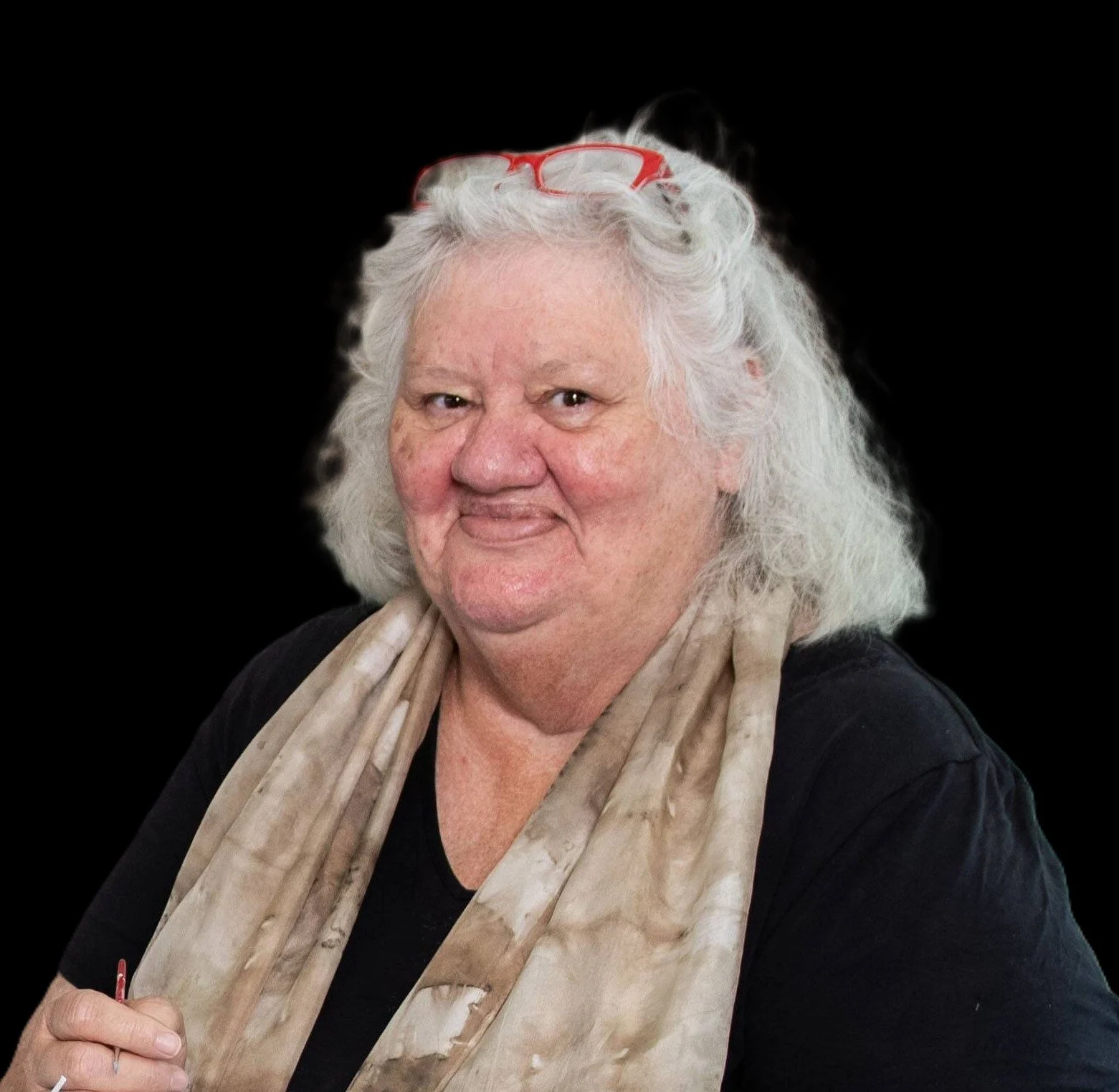
Teresa Yasserie
Online Teresa Yasserie. From the Peak Hill, Dubbo region. My works reflect on a childhood in Peak Hill, with my people of the red dust. The concepts have always reflected on family childhood memories and our environment. Many artworks were developed from visions of marks and tracks animals and little humans in the dust. The images of life on the land and environment are depicted in the style and technique of Storytelling.
The works are on paper mostly Fabriano paper. I work with liquid charcoal and ochre. I used to make my own liquid charcoal cut it from trees burn in tins and grind down with liquid and medium to form a lush liquid. Due to health those days are gone I now use liquid charcoal from the art supplies. I still grind and mix my ochre that I collect with permission from here in Dubbo.
I have been making art for many years now and still enjoy the process of making researching and experimenting in my styles and techniques. My first exhibition was at the maritime museum in Sydney with other Aboriginal artist. I was very fortunate to have my artwork on the cover of the Maritime Museum magazine, which springboard me into the beginning of my art career. I went on to university Southern Cross in Lismore. Gained a bachelor of Fine Arts. Majored in printmaking that’s where my love of paper came from. Most of my art was black and white and style was boarding on minimalist style and concepts were all was narrative, telling stories. I was fortunate to attend a printmaking seminar in Alice Springs with Indigenous artist from many communities who shared their styles and techniques a wonderful experience.
During my university years I applied and won the position to design a logo for the WWW 7 conference in Australia that was a great opportunity in my first commission work. The art career had began I received various awards and more commissioned works as well as a special exhibition at the University it was called 10 years an artist was chosen for each year. I was fortunate enough to be selected for the exhibition.
After University I began teaching at schools an TAFE Western NSW. Teaching Aboriginal Cultural Arts. It was during this time I began working with charcoal and ochre in its raw state. Many hours were spent on researchingother Indigenous artist and experimental ideas, with many fails and success's. The future now is slowing down with age and health changes but the desire remains the same. Looking for new concepts that haven’t been explored looking at bringing vibrant colours into a modern mark making artworks
Jessica Leffley
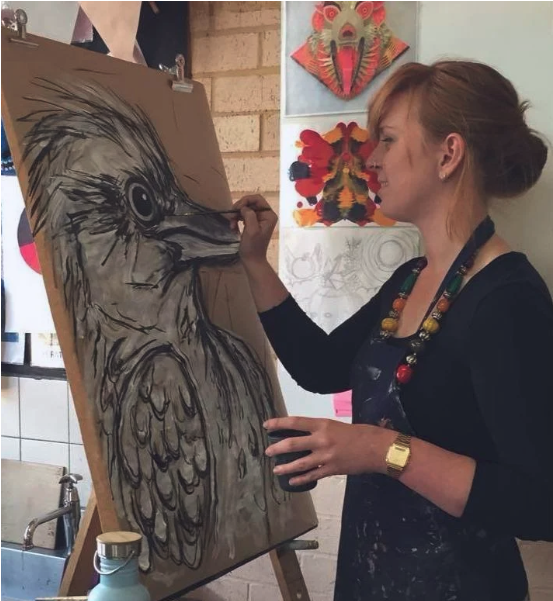
Online Jessica Ann Leffley is a Lithgow based Wiradjuri woman, both an artist and primary school teacher, who expresses her imaginations and interactions of Australian native birds through drawing and painting. Her birds have been exhibited at various galleries and to her delight, have found homes throughout Australia.
Leffley sees her birds as her friends, she talks to them as she peers outside her studio window admiring the Black Cockatoos, King Parrots and Rainbow Lorikeets that sing to her while she creates. Her birds bring her comfort and joy, while also challenging her to explore her creativity and to appreciate the landscapes she knows as home.
Warranha Ngumbaay
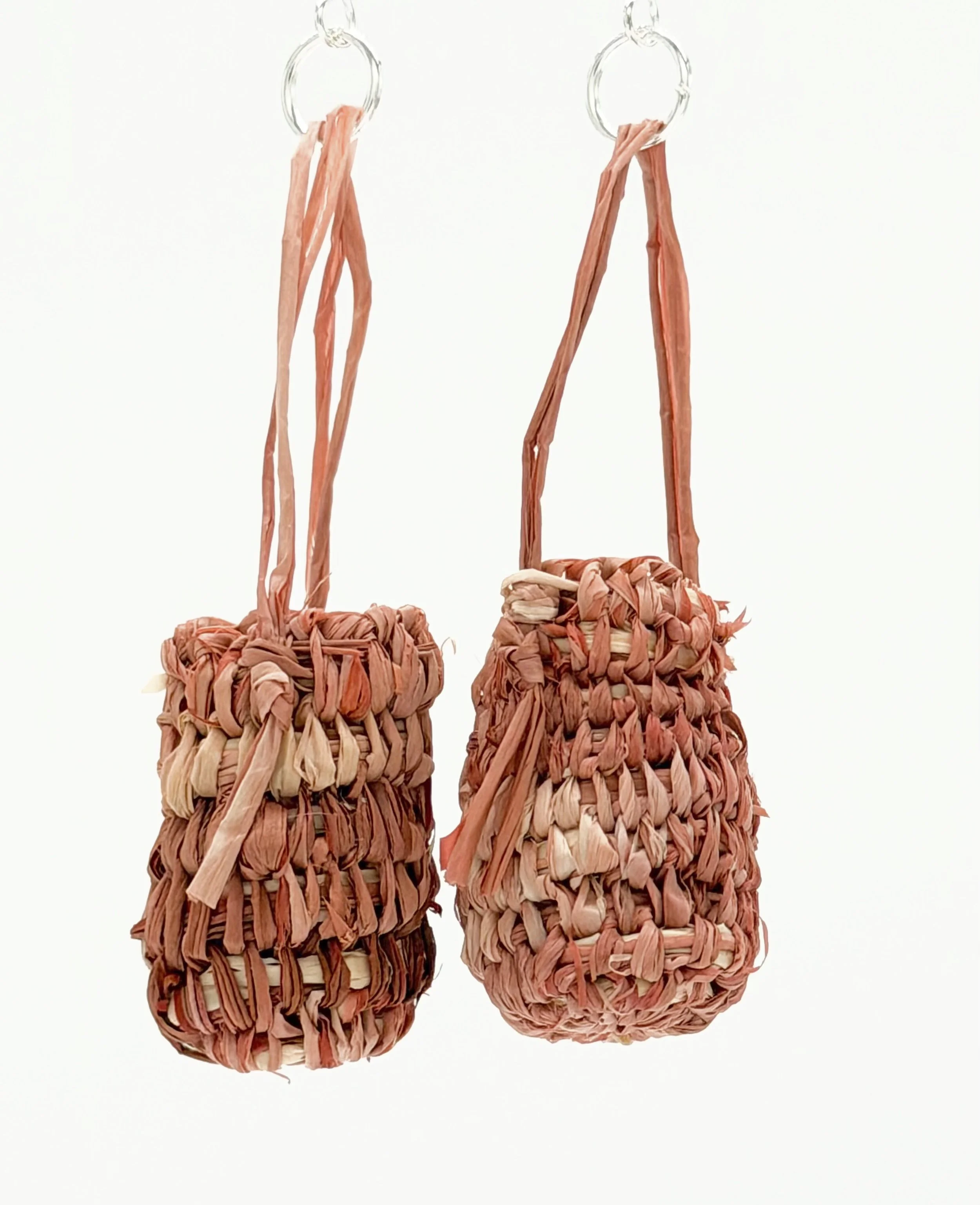
Online Warranha is a Wiradjuri woman from the Mowgee clan of the Wiradjuri nation. Her works include weaving and jewellery and she enjoys working with natural materials including native fibres and materials and possum skins as a way of maintaining cultural practices and passing on knowledge to the next generation.
Ronda Sharpe
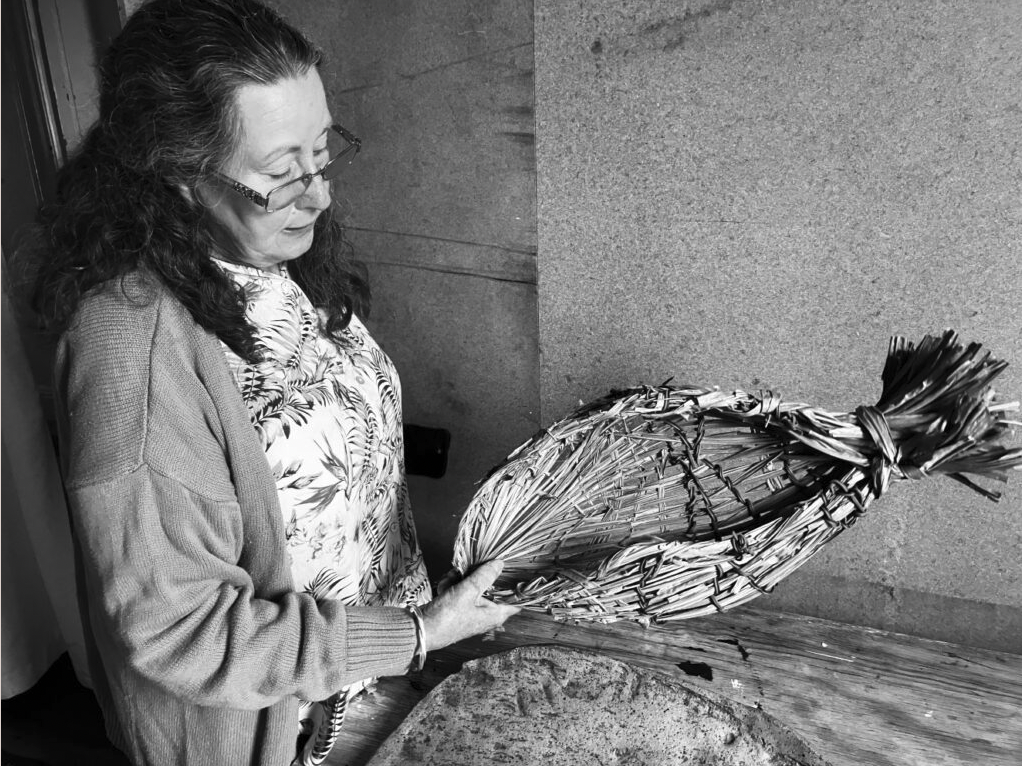
Online Ronda Sharpe is a Wiradjuri artist who intertwines a visual narrative of First Nations continuum to languages, culture, and traditional artefact forms with her environmental arts practice of combining the use of repurposed mediums including data and electrical cables and natural fibres including Wiradjuri grasses. The fusion of contemporary and historical Wiradjuri weaving customs with reclaimed post-industrial materials creates a visual story that comments on present day environmental issues and transforms the objects into contemporary sculptural forms.
Sharpe has completed Master of Visual Arts, Contemporary Australia Indigenous Art (CAIA), (QCA), 2020, Bachelor of Fine Arts (QCA), 2018, associated Diploma of Creative Industries, (JCU) 2016.
Sharpe relocated back to her hometown of Parkes (Wiradjuri country) 2020 and currently showcased her work in a solo exhibition, ‘Interwoven connections 2023’ Home Program (WPCC) saying: ‘Being on Wiradjuri country allows me to connect to my Ancestors and Mother Earth, stand proud on country and continue making contemporary fibre artworks that represent cultural artefacts, and ‘Yindayamarra’ (respect) for Mother Earth.’
Sharpe was selected for Arts Out West, 50th Anniversary Plinth Show 2024,, Wiradjuri Ngurambang Permanent Exhibition 2022, Wiradjuri curatorial member (PSLCC) showcasing Wiradjuri artefacts, language, artwork. South Stradbroke Island Indigenous Artist Camp, 2019, and exhibition (HOTA), mentors Gordon Hookey, Rick Roser, Bianca Beetson, Laurie Nilson. Intertwine Fashion Parade, Grace Lillian Lee, Gold Coast Festive 2018 and Churchie National Emerging art prize, 2018.
Sharpe facilitates weaving, and recycled art workshops including: Wiyi Yani U Thangani National Summit. We are the change 2023, Canberra. Home Program, (AGNSW), (BRAG), 2021,22 & 23, schools, libraries and community venues.